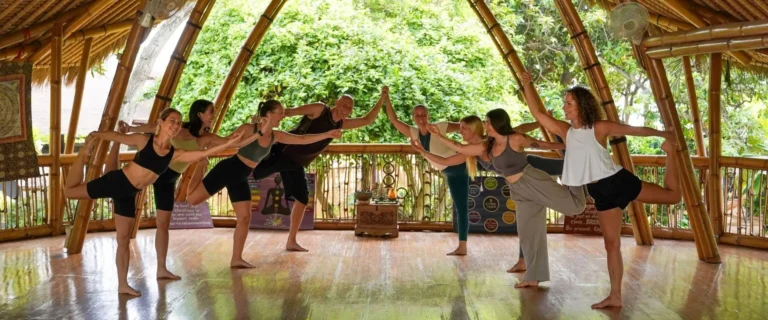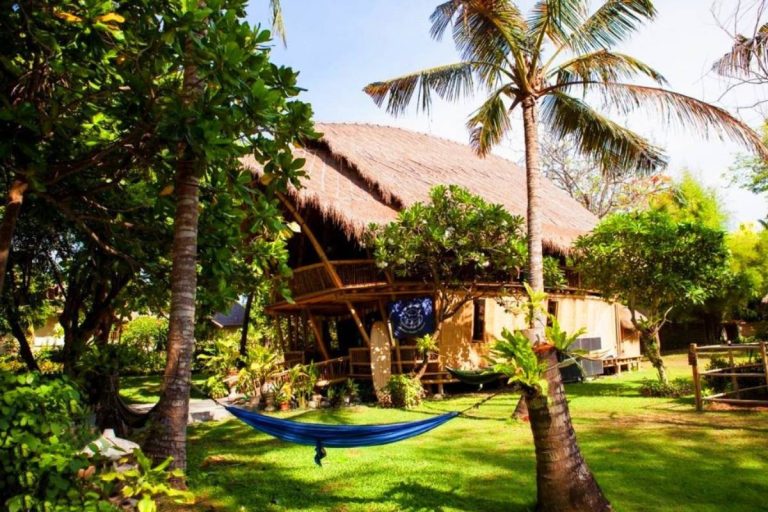
“Am I experienced enough?” It’s the question we hear most from people before signing up for a teacher training. The honest answer is that a complete beginner can join a 200-hour YTT, and many of our past students arrived at our beachfront shala in Sanur, Bali, after only a handful of classes.
Below we answer the doubts beginners bring to us most often, honestly and from our own experience as a yoga school in Sanur since 2010.
Table of Contents
Can a complete beginner join yoga teacher training?
Yes. A complete beginner can join a 200-hour yoga teacher training. At Power of Now Oasis in Sanur, Bali, many students have started with only a few weeks or months of yoga practice. A 200-hour YTT is the foundation course in a yoga teacher’s education. It gives you the basics for teaching or for your own practice, and you keep building on it afterwards with further courses or your own classes. Good yoga teacher training for beginners starts from the ground up, so you don’t need to arrive with any of it already in place.
We won’t pretend it’s easy. A 200-hour YTT is a full-time course, and the first days can feel like a lot: new poses, new words, early mornings and plenty of information at once.
But so far, every student who arrived with little experience has made it to graduation. Many of them grew a lot in those four weeks and found out they could do much more than they thought.
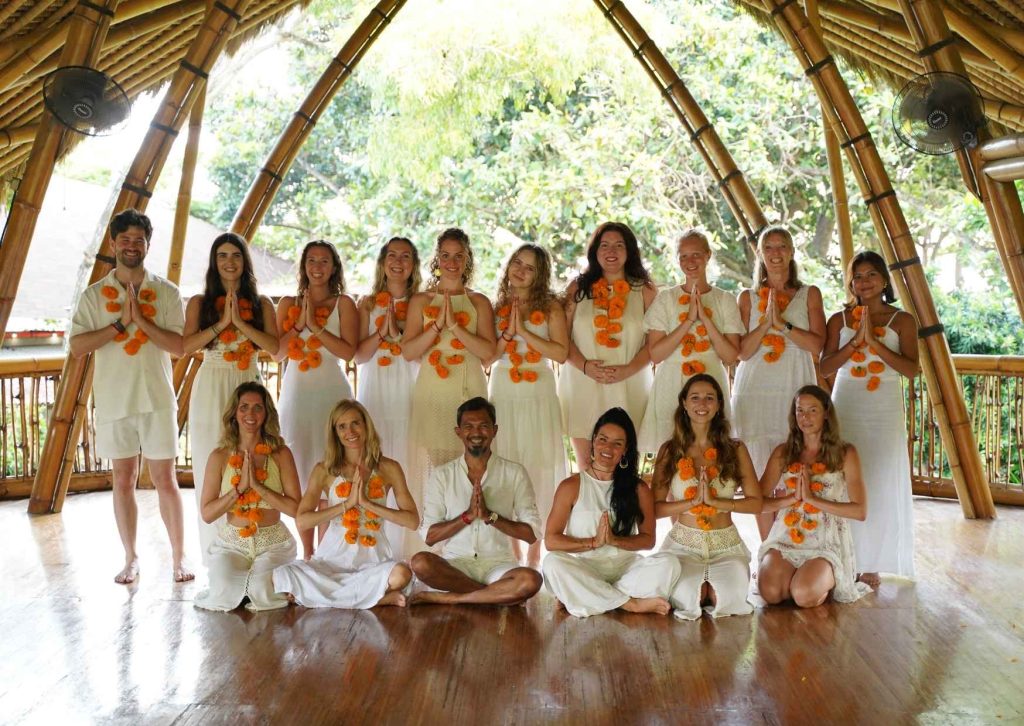
Nobody does it alone, either. Your lead teachers are Sheryl and Krisna, both E-RYT 500 with more than 10 years of teaching at Power of Now Oasis, and Victoria, an RYT 500 teacher who did her own training with us in 2023. Together with our support team, they are there for you throughout the course.
Every week we hold a revision session where we go over what you have learned, answer open questions and make sure nobody falls behind. You also get personal feedback from your teachers along the way.
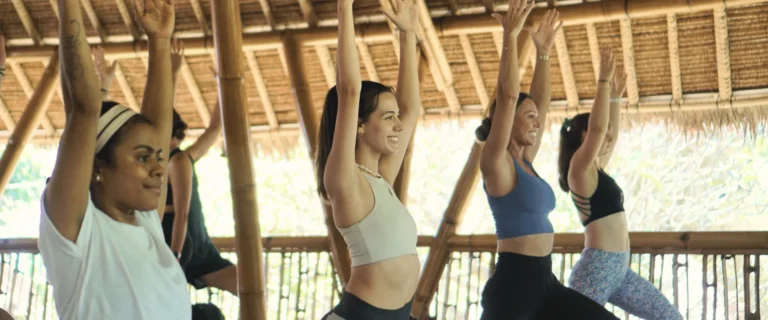
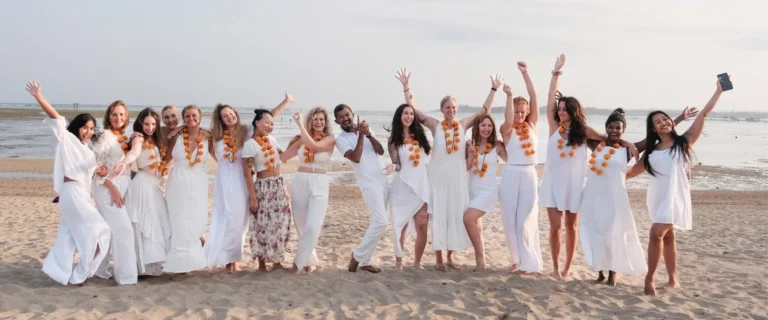
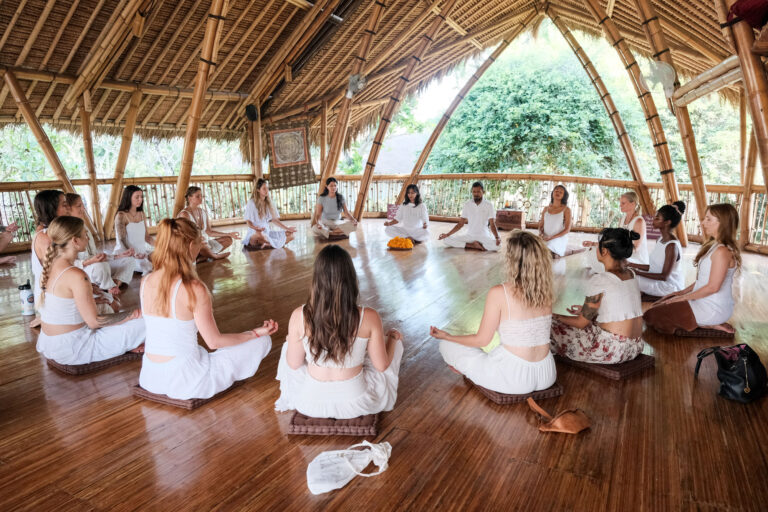
The atmosphere is supportive rather than competitive, and your group quickly becomes a small community. For many students, the friendships made here become one of the most valuable parts of the program.
How much yoga practice should you have first?
You don’t need a certain amount of experience. There is no set number of classes, months or years. The one thing we would ask is that you know you enjoy yoga, because you will be practising every day for four weeks.
Join a few classes before you book, at a local studio or online, and try a couple of different styles. If you find yourself looking forward to the next class, that’s a good sign. Everything else, from alignment to anatomy and philosophy, we teach you from the ground up.
If you would like more practice once you are here, YTT students get unlimited access to our daily yoga classes for two weeks before and two weeks after the training. Quite a few students arrive early to settle in, get over the jet lag and ease into the rhythm.
Do you need to be flexible?
No. Flexibility comes with practice, and it also looks different in every body. Your bone structure, past injuries and daily life all shape how a pose looks on you. Some people will always fold deeper than others, and that’s completely fine.
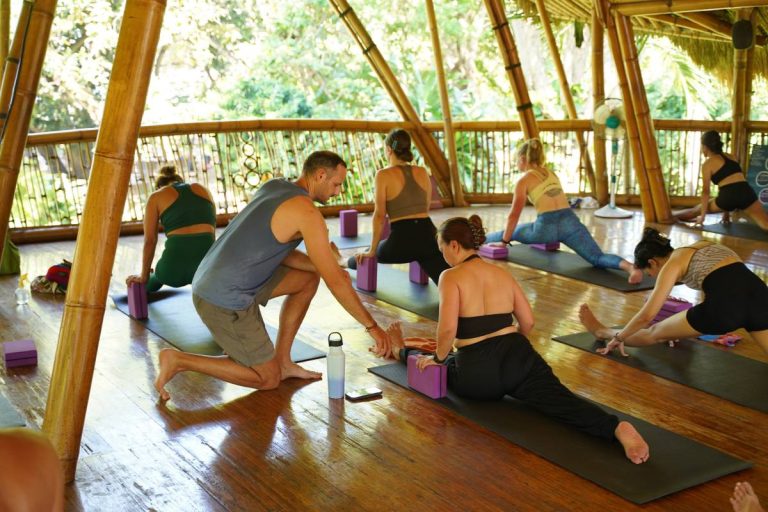
Plenty of our trainees couldn’t touch their toes on day one, and that has never been a problem. Our teachers show you modifications and alternatives for the poses. You will need these later too, when you teach students whose bodies are different from yours.
Students who find some poses hard often turn into very good teachers, because they know how a beginner feels on the mat. We wrote a whole post about this: Do You Need to Be Flexible for Yoga? 5 Yoga Myths, Gently Busted.

What does a day in our YTT look like?
Monday to Friday follow a similar rhythm. You will receive the full timetable at the opening ceremony on your first day, but this is roughly how a day flows.
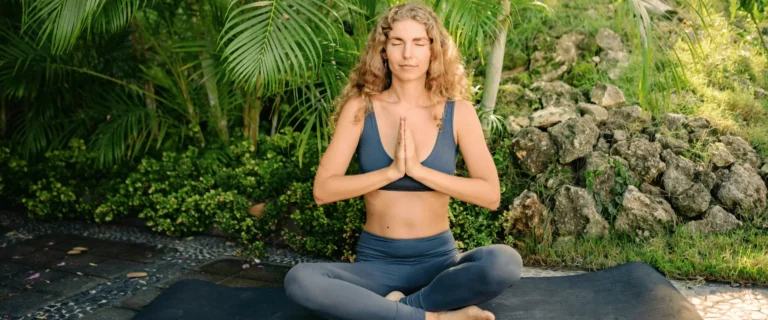
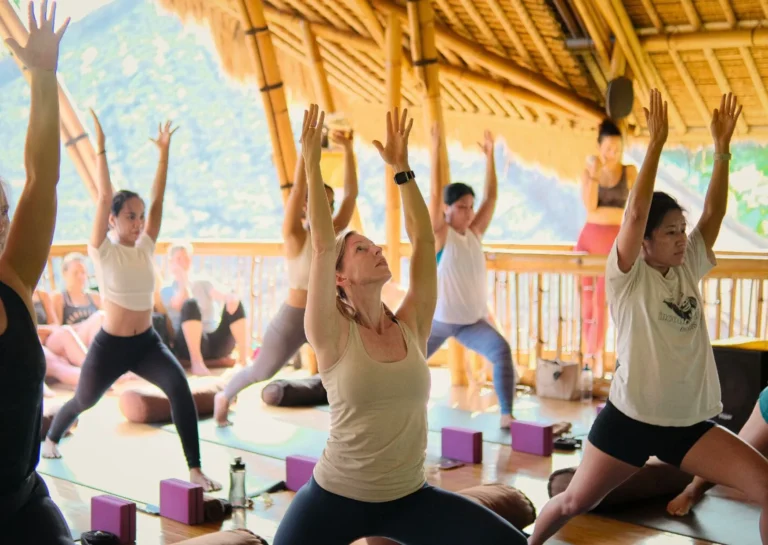
Morning meditation and asana practice: The day starts quietly, while the air is still cool and the island is slowly waking up. You begin with meditation, noticing your breath and listening to the ocean somewhere behind the trees. Then you move into a group asana practice.
Breakfast: Your breakfast bowl is included: seasonal fresh fruit, homemade yogurt and granola at the shala. Some students head to a nearby café for a smoothie bowl, others journal under a palm tree or take a slow walk along the beach.
Theory and learning sessions: You learn why breath changes the mind, why alignment matters, and why teaching is as much about seeing your students as speaking to them. Over the four weeks, these sessions cover everything from anatomy to yoga philosophy.
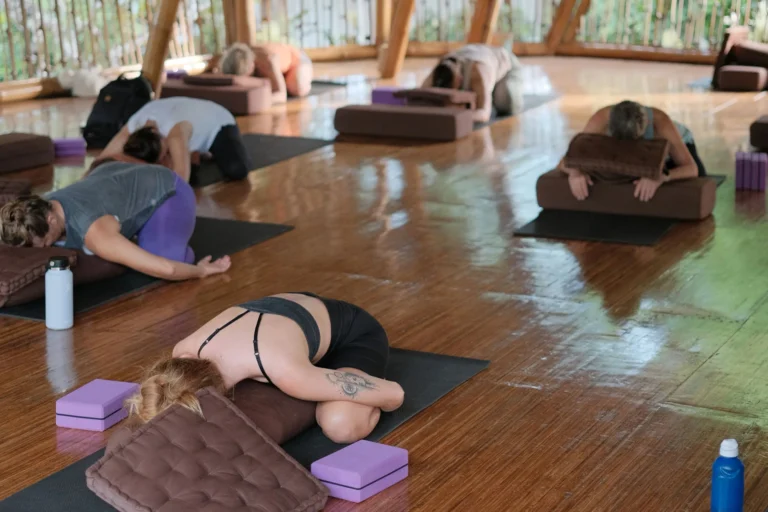
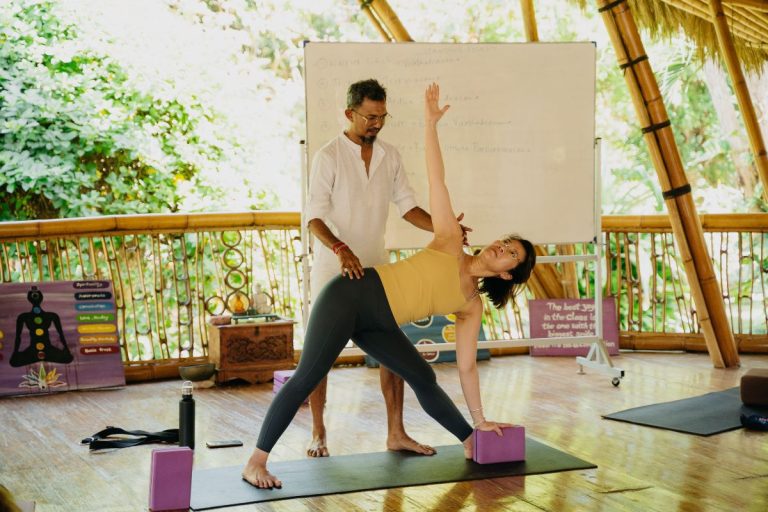
Asana Posture Lab: Here we break poses down slowly, look at how different bodies move, and practise safe hands-on adjustments. It’s a space to ask every question you have, and it is often full of laughter. Beginners and more experienced students learn side by side, and you get direct feedback on your own practice and your adjustments.
Lunch break: Time to eat, rest and let the morning settle.
Yogic Relaxation: A deep rest in the early afternoon. Some students fall asleep, and nobody minds. This is also where you lead your first Yoga Nidra session yourself, so you start gaining teaching experience from the very first week.
Afternoon theory: One more learning block to round off the day.
Weekends: Saturday is a lighter half day. Sunday is completely yours: beach cafés, temples, scooter rides, watching the sunrise, a long nap, or doing absolutely nothing. From Sanur you also have easy access to the rest of Bali for day trips.

Is 4 weeks too intense?
Some courses fit 200 hours into three weeks. Ours runs over four, and for beginners that is a real advantage. With the hours spread out, you don’t sit through hour after hour of theory. You have more time to absorb what you learn, rest your body and ask questions before moving on.
We asked Krisna, one of our lead teachers, what beginners find hardest at the start and what changes by the end:
"In the first week, many beginners think they have to understand and remember everything. They don't. At the start it's about the big picture, and that big picture is more than asana. Karma yoga, jnana yoga and bhakti yoga are all part of it too. By the end of the third week, you can see the change. They are more confident, they understand what it's all about, and they are much less scared."
The lighter Saturday and free Sunday give you space to process the week, explore Bali and come back fresh on Monday. It’s still a full course, but it’s paced so you can actually take it in. And unlike online courses, the training happens in person at our beachfront shala. You get hands-on adjustments and see how real bodies move.
What if you have never taught before?
You don’t need any teaching experience. A 200-hour training is where you learn to teach, and we build your teaching skills with you step by step. This is what we cover together, at a pace that works for beginners:
- Asana: refine your practice and learn safe alignment for over 75 poses, and how to teach each one to different bodies.
- Pranayama and meditation: breathing and meditation techniques to calm the mind, for your personal practice and your future classes.
- The art of teaching and sequencing: how to build safe, creative sequences, cue clearly, assist students and hold space.
- Yoga anatomy: how bones, muscles and joints work together in practice.
- Yoga philosophy and history: from the Yoga Sutras to modern interpretations.
- Specialty topics: Ayurveda with Dr. Dwi, prenatal yoga with Victoria and Acro Yoga with Sheryl.
- Kriyas and japa: cleansing and mantra-based techniques.
- Subtle body anatomy: chakras, nadis, prana, bandhas and koshas.
- Practice teaching: you guide real classes and get constructive feedback from Sheryl, Krisna and Victoria.
By the end of the four weeks, standing in front of a group will feel a lot less scary than it does now. When you complete the program, including your practical exam, you receive your 200-hour certification. That certification is your first step as a yoga teacher. The teaching experience you gain here helps you start with confidence.
One graduate's story
Zheng Wei from Taiwan took his first yoga class in April 2026. He fell in love with the practice almost straight away, and only five months into his yoga journey, he joined our September to October 2026 training program. He came to deepen his own practice and to learn how to work with people, so he could teach back home in Taiwan.
The four weeks had their ups and downs. Everything was new: the island, the people around him, and learning in a language that isn’t his own. But step by step, it came together.
Zheng Wei gave a great practical exam and graduated with his 200-hour certification. Watching him teach that final class, we could see how much he had learned and how far he had come, as a yoga teacher and as a person, since his very first class a few months earlier.

How to prepare
You don’t need to do much to get ready, but a little preparation makes the first week of the course easier. Take a few classes in different styles, think about why you want to do the training, and pack light. Mats and props are available at our school, so you have access to everything you need for practice. Our guide How to Prepare for Our 200-Hour YTT in Bali covers what to pack, visas, travel tips and how to prepare your body and mind.
Next intakes
These are the dates for our 2027 teacher training programs:
- March 14 to April 9, 2027
- April 18 to May 14, 2027
- May 30 to June 25, 2027
- July 11 to August 6, 2027
- August 22 to September 17, 2027
- October 3 to October 29, 2027
- November 14 to December 10, 2027
You can find prices and book your place on our YTT page.
Still have questions? Send them through the form there. Amelia reads every message and replies within one working day.